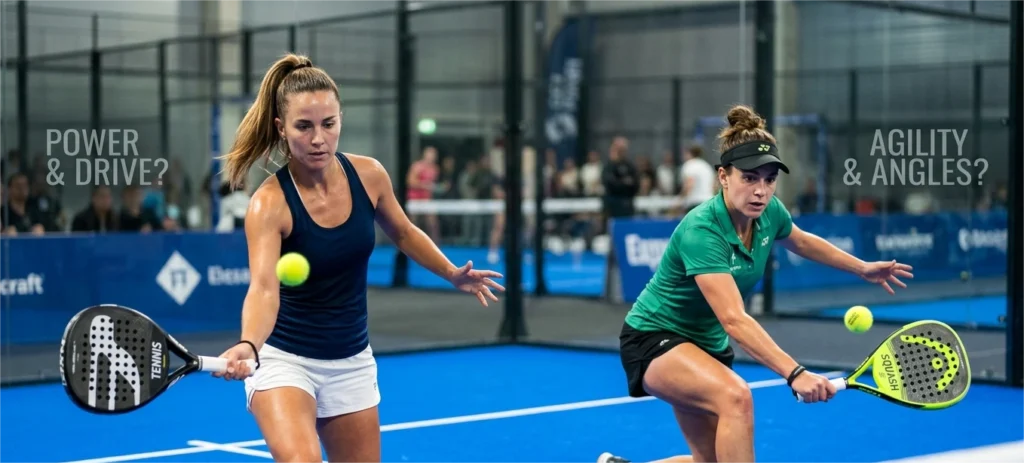
The most effective padel shots are not always the most spectacular ones. While most club players practise smashes, lobs, and flat drives, a small set of underrated padel shots consistently win points at every level and almost nobody sees them coming. These are the shots that professional players on the Premier Padel and World Padel Tour circuits used throughout 2025 to disrupt opponents who thought they had every situation covered.
Each shot in this guide solves a specific tactical problem that common shots cannot. They are not trick shots. They are smart, repeatable weapons and once you add even two or three of them to your game, you become significantly harder to read and defend against.
The players who win the most points are not always the ones hitting hardest. They are the ones with the widest shot vocabulary.
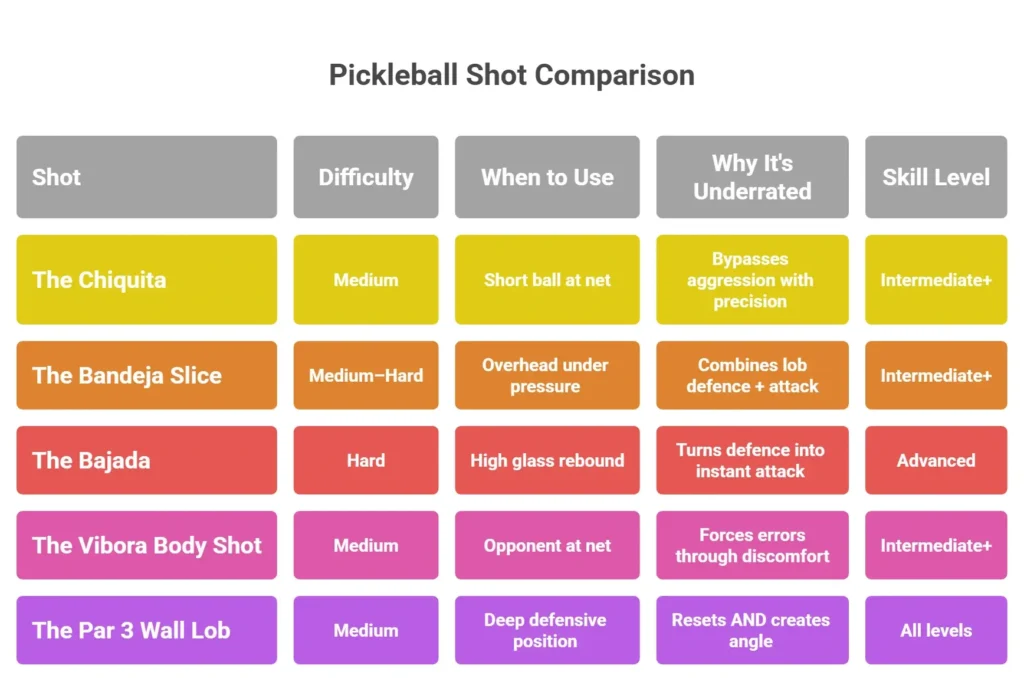
The 5 Underrated Padel Shots at a Glance
Shot 1: The Chiquita (Precision Over Power at the Net)
Used by: Alejandro Galan, Arturo Coello | Situation: Short ball at the net kitchen zone | Effect: Forces a low, awkward return.
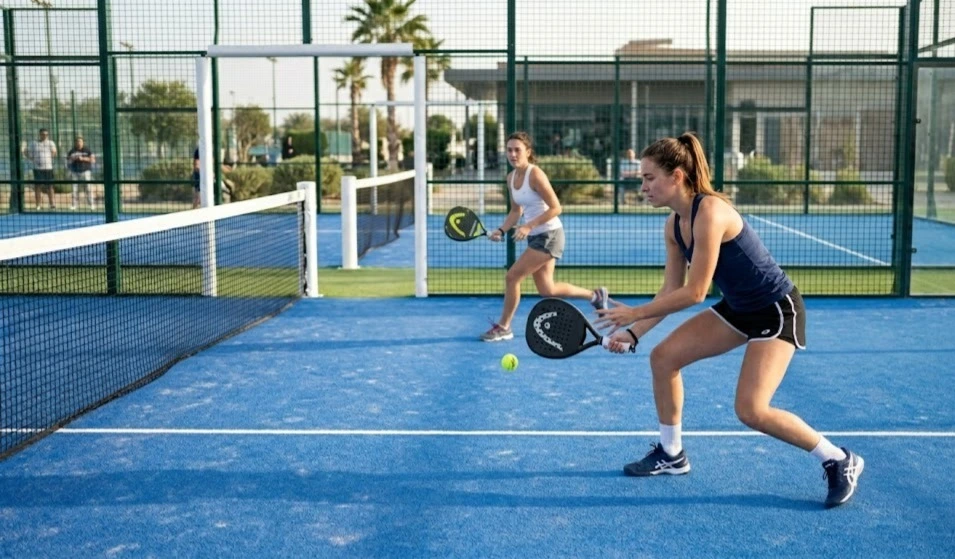
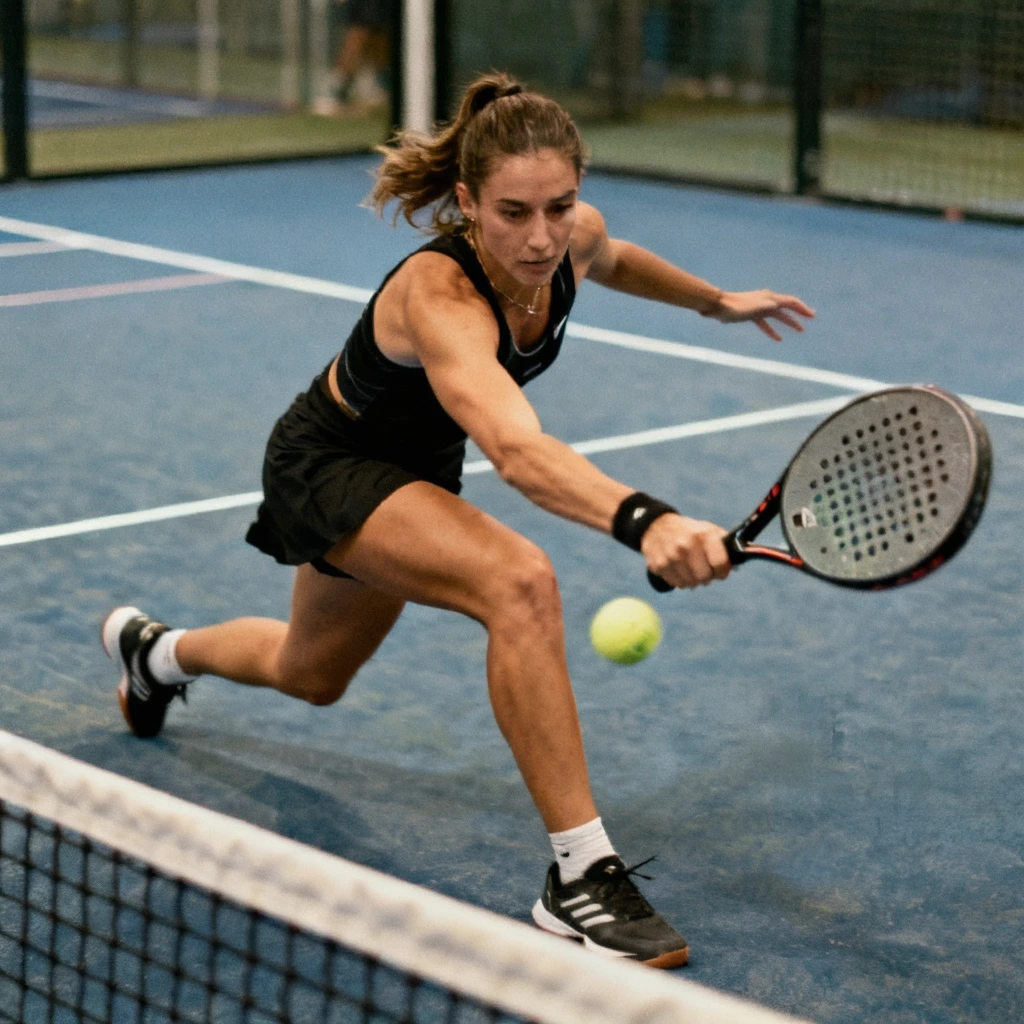
Most players respond to a short ball at the net by trying to slam it. The chiquita does the opposite.It is a soft, low, topspin-loaded shot played cross-court or down the line that dips aggressively just over the net and lands tight to the opponent’s feet. The ball stays low, forcing opponents to volley upward and hand you the attacking position.
What makes it underrated is the psychology behind it. In a fast-paced rally, the instinct is to hit harder. Players who recognize the chiquita opportunity and resist that instinct catch opponents completely off guard — the sudden change of pace and trajectory creates more errors than any hard drive would.
How to Execute It
- Grip: Continental, relaxed 4 out of 10 pressure until contact.
- Swing path: Low to high, brushing the back of the ball to generate topspin. Short, compact swing no backswing.
- Contact point: Below net height, approximately knee level, well in front of your lead foot.
- Target: Aim for the T-line or the sideline near the opponent’s feet not the open court.
 Drill: Feed yourself a short ball and practice the chiquita cross-court 20 times before moving to the down-the-line version. The cross-court angle is more forgiving and worth mastering first.
Shot 2: The Bandeja Slice(The Overhead That Doesnot Give the Point Away)
Used by: Franco Stupaczuk, Federico Chingotto | Situation: Overhead when out of position | Effect: Neutralises attack while maintaining net position
Most players abandon the net the moment a lob goes over their head. The bandeja slice is why the best defenders in padel do not need to. It is an overhead hit with a sliced, angled racket face that produces a flat, skidding ball with heavy sidespin keeping the ball low after it bounces, pushing opponents deep, and crucially allowing the hitter to stay at or recover quickly to the net.
The 2025 and 2026 professional game has seen a significant tactical shift toward the bandeja as a primary defensive overhead, particularly among mixed and men’s doubles pairs who prioritize net dominance over power. It is the shot that separates reactive players from tactically composed ones.
How to Execute It
- Preparation: Pivot sideways immediately the lob goes up. Do not turn your back keep the ball in front of you.
- Racket face: Open and angled at approximately 45 degrees at contact you are slicing across the ball, not driving through it.
- Contact point:Slightly in front of and above your hitting shoulder.
- Follow-through: Across the body toward the non-dominant hip this generates the sidespin that kills the bounce.
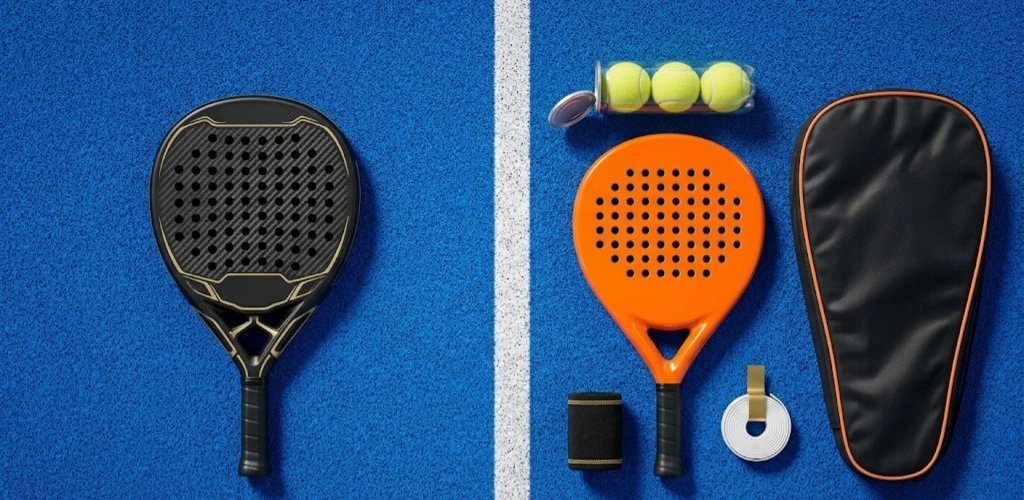
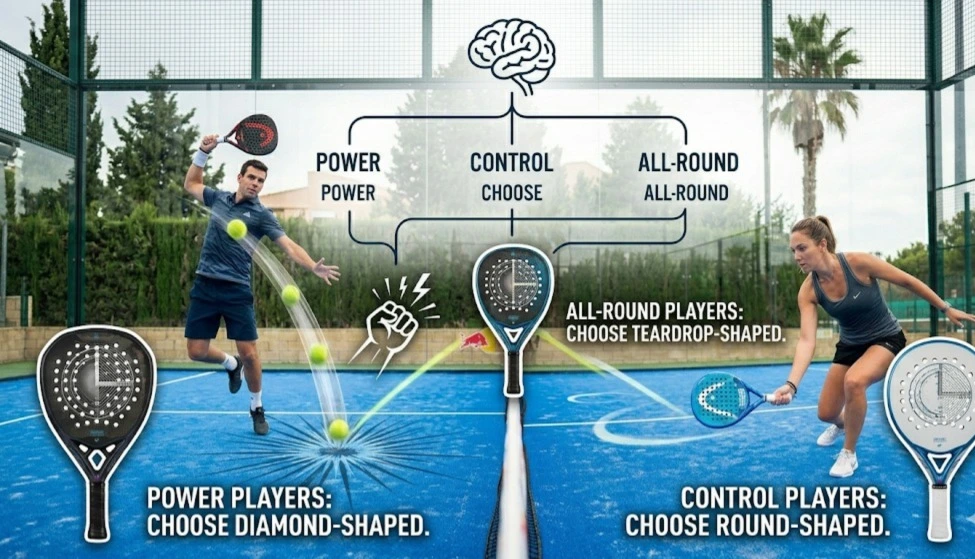
💡 Tactical Note:The bandeja is a “reset” shot designed to keep you in control of the point. While heavy power rackets are popular, many players find that intermediate teardrop rackets offer the best balance of maneuverability and sweet-spot consistency needed to master this specific slice. Once you hit the bandeja, recover immediately to the net to maintain pressure.
Shot 3: The Bajada ( Turning the Glass Wall into a Weapon)
Used by: Juan Lebron, Agustin Tapia | Situation: High rebound off the back glass | Effect: Converts a defensive position into an immediate attack
The bajada is the most technically demanding shot and the most rewarding. It is played when the ball rebounds high off the back glass wall, giving you a ball that is dropping from above net height. Instead of lobbing it back defensively, the bajada involves letting the ball drop to around waist height and then driving it aggressively down the line or cross-court, using the pace of the rebound rather than fighting it.
Opponents who have pushed you back with a lob expect a defensive reset. The bajada punishes that assumption entirely. It converts what looks like a losing position into an instant counter-attack and at club level, most opponents have never seen it coming until it lands at their feet.
How to Execute It
- Wait: Let the ball drop fully below shoulder height after the glass rebound. Hitting early loses all control.
- Body position: Sideways stance, weight on front foot at contact.
- Swing: Compact and downward you are driving the ball toward the net, not scooping it up.
- Direction:Down the line is higher percentage for beginners of this shot; cross-court bajada opens angles but demands more precision.
⚠️ Common Mistake: Most players hit the bajada too early before the ball has fully descended from the glass. Wait longer than feels natural. Patience is the entire mechanic of this shot.
Shot 4: The Vibora Body Shot (Discomfort as a Tactic)
Used by: Ale Galan, Paquito Navarro | Situation: Opponent positioned at the net | Effect: Forces rushed, mis-timed return through awkward positioning
The vibora is well known as a spin-heavy overhead. What is less discussed and dramatically underused at club level is aiming it directly at the opponent’s body rather than at the open court. A vibora directed at the chest or hip of a net player forces them into an awkward, cramped swing with no room to generate a clean return. The shot does not need to be fast. It needs to be accurate.
Research from Premier Padel’s tactical analysis unit published in late 2025 found that body-directed shots at the net forced unforced errors on over 34% of returns at the professional level a significantly higher rate than winners aimed at open court spaces. At club level, where players have less body awareness and reaction speed, the effect is even more pronounced. This is not a dirty tactic. It is the most logical target on court when the opponent is close to the net.
How to Execute It
- Target zone: The dominant shoulder or the hip on the backhand side both force a cramped, upward return.
- Height:Aim for between hip and chest level. Too high gives the opponent time to step back; too low gets intercepted cleanly.
- Pace:Medium pace with vibora spin is more effective than a flat drive. The spin makes the ball move unpredictably as it approaches.
🧠 Tactical Insight: Combine this with the threat of a cross-court vibora. If you have hit two cross-court viboras, your opponent will anticipate the third that is when the body shot produces the highest error rate.
Shot 5: The Par 3 Wall Lob (The Reset That Creates Angles)
Used by: Carolina Navarro, Gemma Triay | Situation: Deep defensive position near back glass | Effect: Sends the ball into the back corner via the side wall, creating an unreachable bounce
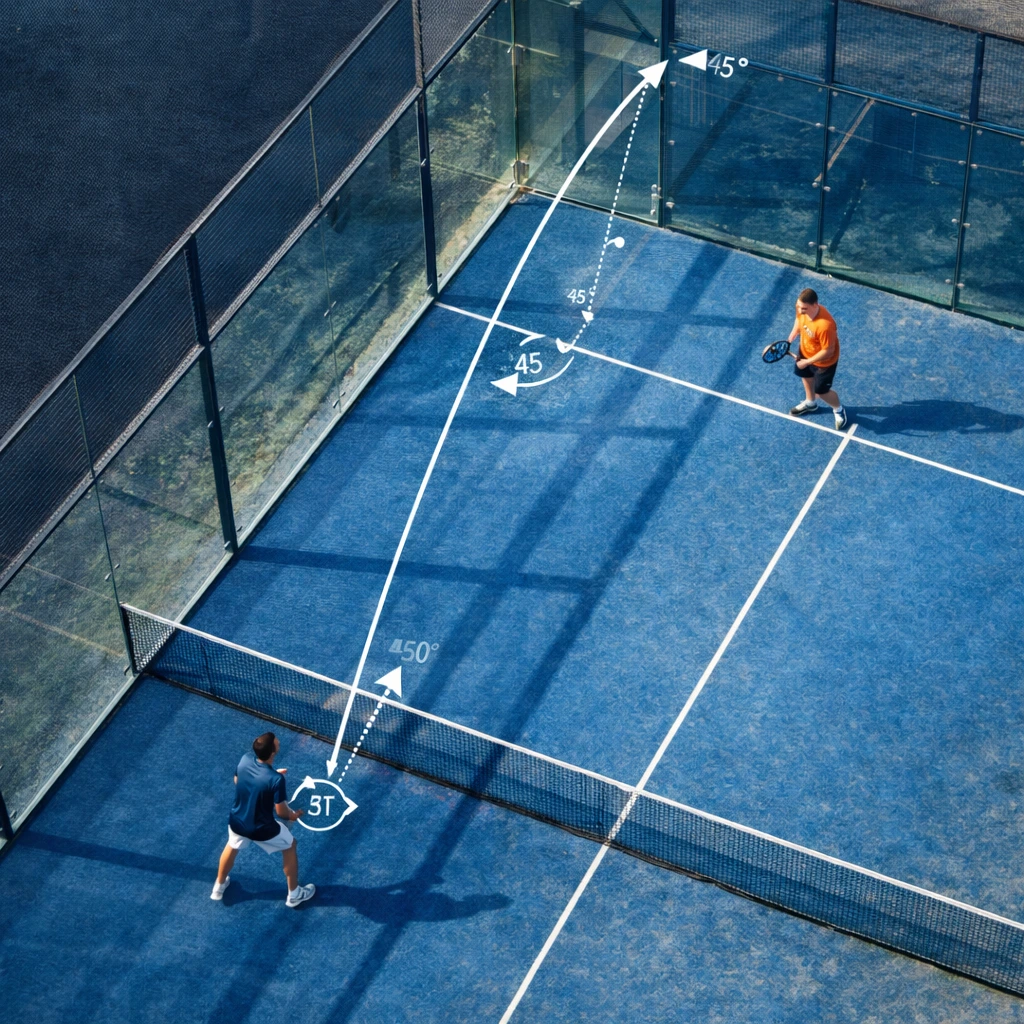
The par 3 named for its three-wall trajectory is one of the most tactically intelligent shots in padel, yet most club players never attempt it. Hit from a deep defensive position, the ball travels over the net, bounces, hits the side wall, and then rebounds into the back corner at a sharp angle that is almost impossible to return cleanly. It is not a powerful shot. It is a geometric one.
In 2025–2026, the par 3 has been adopted more widely at club level following its increased visibility in streamed Premier Padel and APT Padel Tour matches. Coaching academies across Spain, the UK, and Italy now include it as a standard shot in intermediate programmes which means your opponents are starting to see it, but very few can actually execute it under match pressure.
How to Execute It
- Trajectory: The ball must travel slightly cross-court from your defensive position aiming for the side wall between the service line and the back glass.
- Height: Clear the net with comfortable margin a flat par 3 that clips the net is wasted. Give yourself height.
- Wall target zone: Hit the side wall roughly halfway between the service line and the back corner. Too close to the back glass removes the angle; too far forward bounces back into the centre of the court.
- When NOT to use it: Avoid the par 3 when opponents are already positioned deep it only works when they are at or near the net.
📐 Practice Method: Drill the par 3 without opponents first just you, the court geometry, and a basket of balls. The wall target zone is precise and requires repetition to find consistently under match pressure.
How to Add These Shots to Your Game Without Overwhelming Yourself
The worst approach is trying to use all five shots in your next match. Pick one — ideally the chiquita or the par 3 wall lob, both of which are usable at most skill levels and give yourself four to six weeks of deliberate practice before adding another.
- Week 1–2:Drill the shot in isolation with a feed partner. Focus on mechanics, not outcome.
- Week 3–4:Introduce it in practice matches in low-pressure situations. Expect errors that is part of the learning curve.
- Week 5–6:Use it in real matches. You will know the shot is ready when you stop thinking about the mechanics and start thinking about the timing.
For the equipment side of shot development particularly for the chiquita and bajada which demand precise ball feel .Explore our best padel rackets for control and our padel technique guides for deeper breakdowns of each shot family.
Final Thought: Variety Wins More Points Than Power
Every one of these five shots works not because it is technically superior to a drive or a smash but because it is unexpected. Opponents who have seen a thousand flat drives are prepared for them. They have not prepared for a perfectly timed chiquita, a bajada from the back glass, or a par 3 that dies in the corner.
In 2026, the best club players are not the ones hitting harder. They are the ones carrying shots their opponents have never practised defending.