Choosing the right padel racket is more than a matter of preference it can directly affect your control, power, and overall enjoyment of the game. One of the first questions players face is whether to pick a light or heavy racket.
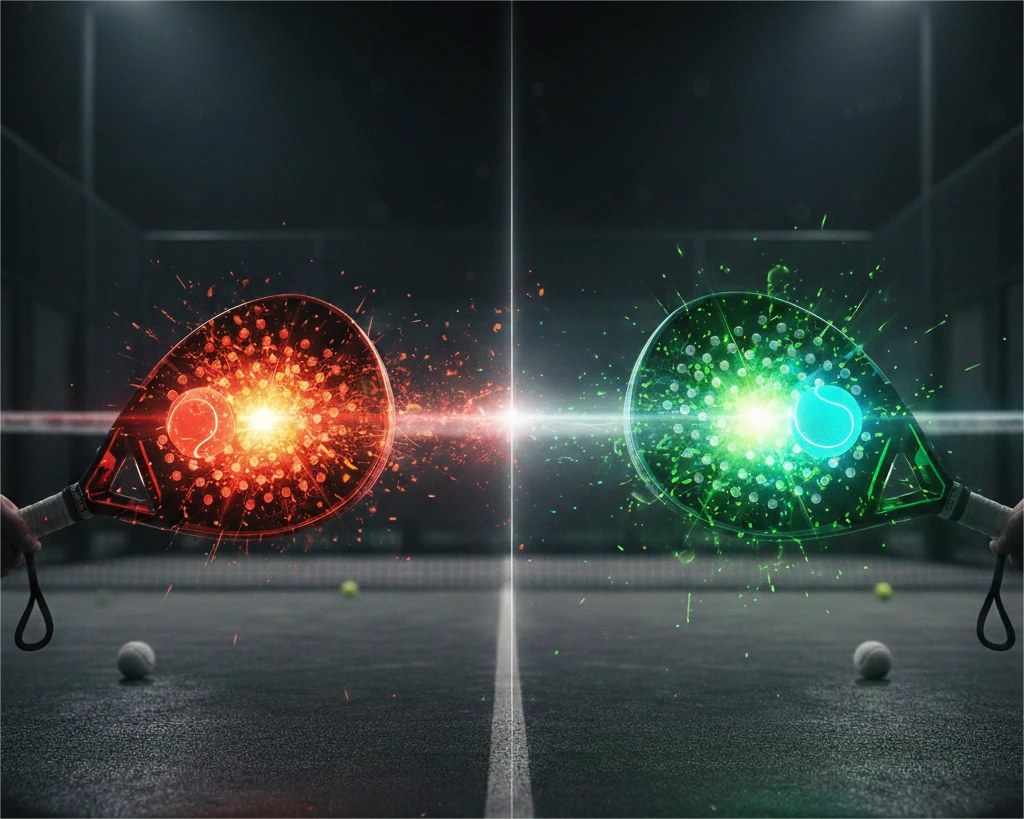
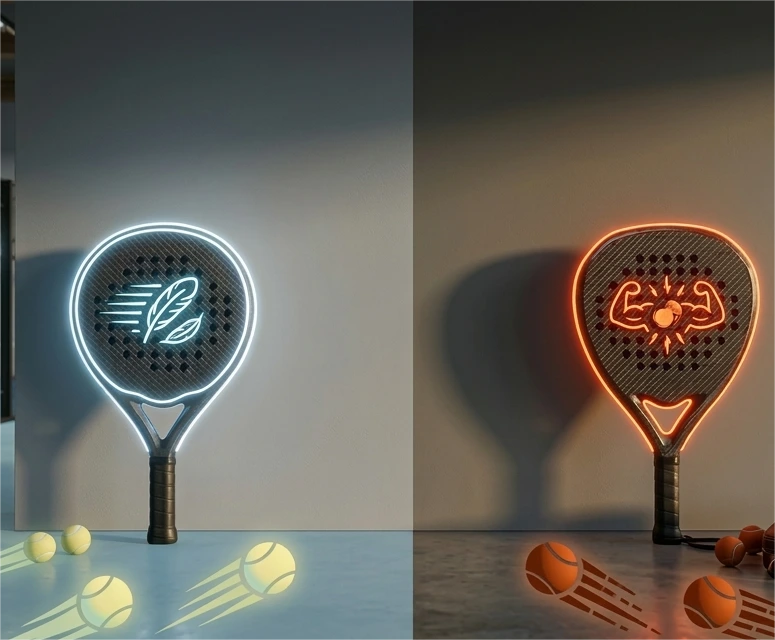
In short: light rackets favor maneuverability and precision, while heavy rackets offer power and stability. Understanding the differences helps you pick a racket that complements your play style and physical strengths.
This guide breaks down everything you need to know, including weight ranges, balance, core materials, pros and cons, and top recommendations for each type.
What Makes a Racket Light or Heavy?
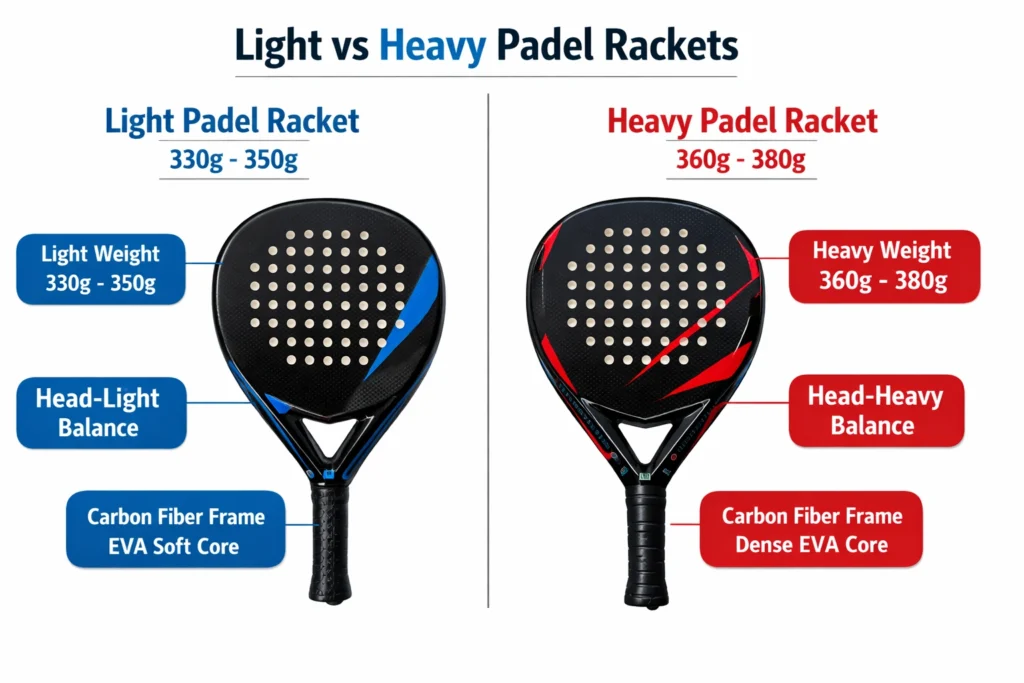
Padel rackets typically weigh 330g to 380g, but overall weight isn’t the only factor.
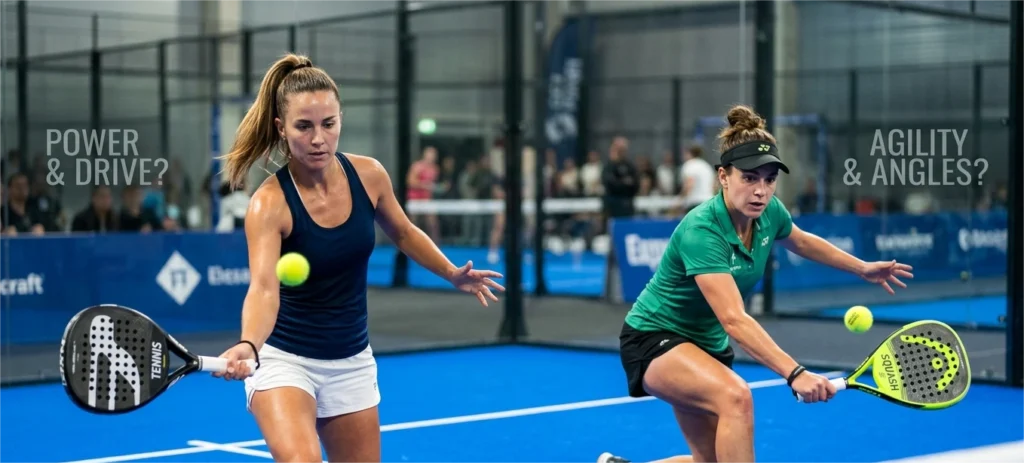
Light Rackets (330–350g): More maneuverable, quicker response, easier on the arm. Ideal for beginners, juniors, and net players.
Heavy Rackets (360–380g): More mass for power and stability. Better for baseline or aggressive players with developed strength.
Balance and materials also affect how the racket feels. Head-heavy rackets feel heavier during swings, while head-light rackets improve control and reduce fatigue. Core density (EVA foam) impacts vibration absorption and feel on contact.
Consider Your Play Style
Your style is the biggest factor in deciding racket weight:
Light Rackets: Best for agile, net-focused players. They allow quick reactions, easier volleys, and faster placement shots.
Heavy Rackets: Suited for baseline, power-oriented players. The extra mass helps generate strong smashes, drives, and stability during off-center hits.
Evaluate Control vs Power
The weight of a padel racket is a critical factor that dictates the delicate balance between control and power. Generally, equipment is categorized into three weight classes, each catering to different skill level and strategic needs.
Light models are the go-to choice for players who prioritize maneuverability and tactical precision. Because they are easier to swing quickly, they offer exceptional control for delicate drop shots, sharp-angled volleys, and strategic placement. While they excel in defensive situations and fast exchanges at the net, they typically offer “less punch” on powerful smashes, requiring the player to generate more of their own force.
In contrast, heavy frames are designed for those who want the equipment to do the heavy lifting. The extra mass allows for significantly more powerful shots and stability during aggressive baseline play. However, this power comes at a cost; heavier weights require more physical strength and refined technique to master. They can feel sluggish during rapid-fire exchanges and may lead to arm fatigue if the player isn’t accustomed to the added mass.
Factor in Arm Health and Comfort
Racket weight affects arm, wrist, and shoulder health:
Light Rackets: Reduced strain on tendons and joints. Recommended for players with previous injuries or who play frequently.
Heavy Rackets: More power and stability, but prolonged use may cause fatigue if technique or strength isn’t developed.
Pro tip: Beginners and intermediate players benefit from a slightly lighter racket to avoid overuse injuries.
Core Material and Sweet Spot
The core of your racket is just as vital as its shape or weight, acting as the “engine” that determines how the ball feels when it leaves the face.
- Soft EVA Core: This core offers a large sweet spot and a cushioned, elastic feel upon impact. It is designed to absorb vibration and provide extra ball output with less effort, making it the ideal choice for someone using a beginner padel racket who values comfort and forgiveness.
- Medium EVA Core: Providing a balanced middle ground, this core offers a mix of power and control. It is frequently found in an intermediate padel racket, as it rewards better technique with improved shot speed while still maintaining a degree of comfort for defensive play.
- Hard EVA Core: Designed for maximum power transfer, this core feels sharp and firm. Because the sweet spot is smaller and less forgiving, it is typically reserved for an advanced padel racket where the player has the precision to hit the center consistently for explosive winners.
Light Rackets: These often incorporate softer cores to further enhance maneuverability and minimize the risk of elbow strain from vibrations.
Heavy Rackets: These generally utilize medium or hard cores to complement the frame’s mass, ensuring better energy transfer and pinpoint precision on high-speed shots.
Pros and Cons of Light Padel Rackets
Advantages:
Enhanced maneuverability : Ideal for quick exchanges and fast volleys at the net.
Less strain on the arm : A safer choice for beginners or players prone to “tennis elbow.”
Greater control :Perfect for precise placement and maintaining a strong defensive game.
Disadvantages:
Less power :You may find it harder to hit aggressive, match-ending smashes.
Less stability :The frame can feel “tippy” or vibrate more on off-center hits.
Lacks “punch” :Advanced players may feel the racket is too light for a confident, heavy swing.
Pros and Cons of Heavy Padel Rackets
Advantages:
Maximum power :The extra mass adds significant weight and force to your smashes.
Greater stability :Feels solid and firm upon impact, even if you don’t hit the center perfectly.
Better energy transfer : The racket does more of the work, allowing for deeper, heavier shots.
Disadvantages:
Reduced maneuverability: Slower to react during high-speed exchanges at the net.
Increased physical strain: Heavier frames can lead to arm fatigue during long matches.
Demands better technique: Requires precise timing and strength to control effectively.
Top Recommendations
Recommended Light Rackets
Adidas Adipower Light 3.1 : Extremely agile and easy to handle, making it a top choice for quick net play and defensive recovery.
Bullpadel Vertex 03 Light :A great middle ground that feels balanced and comfortable while maintaining high precision for tactical shots.
Carbopadel 3K Carbon Series : A specialized beginner padel racket that uses a lightweight 3K carbon weave to provide a soft, forgiving touch without the heavy vibration of traditional frames.
Recommended Heavy Rackets
Babolat Viper Carbon :Built for pure aggression, this frame offers excellent stability and massive power on overhead smashes.
Wilson Pro Staff :A legendary name in racket sports, this model is powerful and precise, specifically tuned for experienced players with high swing speeds.
Carbopadel 12K “Pro” Edition : An advanced padel racket designed for maximum energy transfer. The dense 12K carbon surface provides a rigid, powerful feel that rewards players who can consistently hit the sweet spot.
Choosing between a light or heavy padel racket is not just about numbers on a scale. It’s about your style, strength, technique, and comfort. Test rackets in practice sessions and focus on how they feel in your hands. With the right weight and balance, your racket will feel like an extension of your arm, helping you play better, avoid injuries, and enjoy the game more.