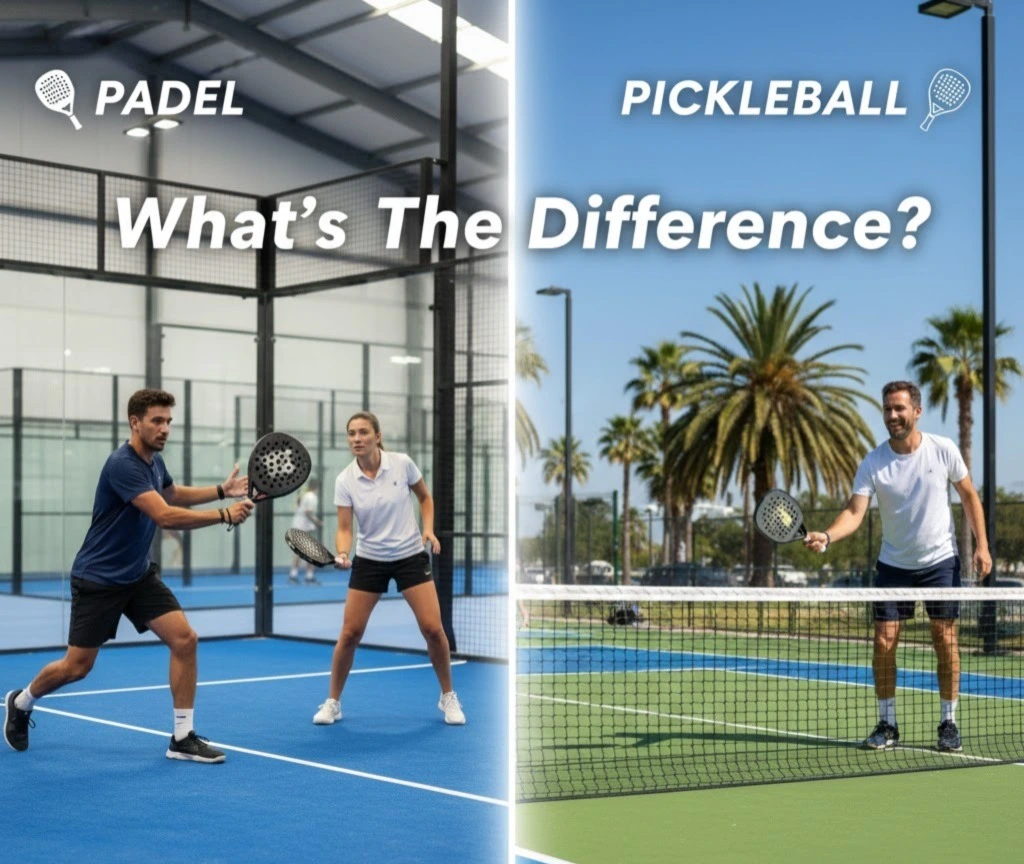
What is the difference between padel and pickleball? The biggest difference is the playing environment. Padel is played on an enclosed court with glass walls that stay in play, while pickleball is played on an open court without walls. Because of this, the style of play, movement, and tactics are completely different.
Both games are social and accessible, but they feel completely different once you start playing. The sections below explain the real differences that matter on court.
Court Design and Layout
The most noticeable difference appears the moment you step onto the court.
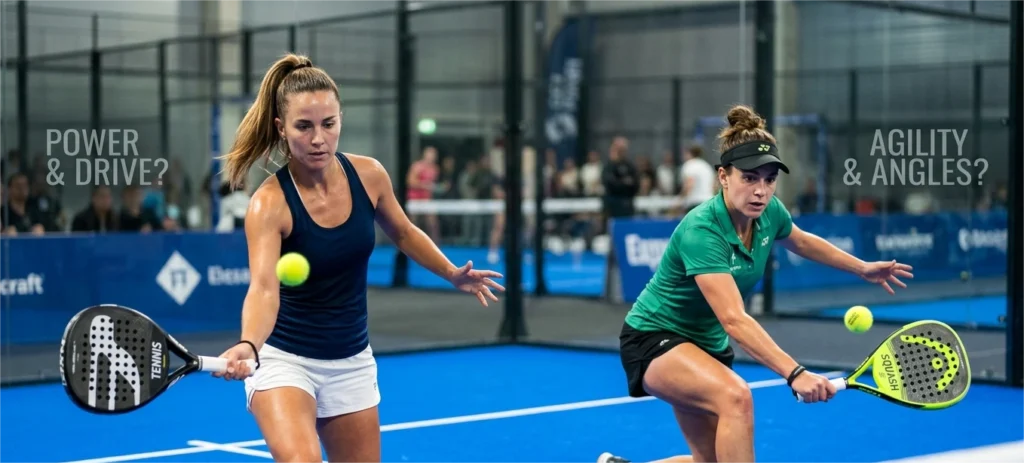
Padel uses a smaller enclosed playing area surrounded by glass and mesh walls, while the pickle ball is played on a flat open court without barriers. Because of this, movement patterns and tactics differ immediately.
In the enclosed format, the walls remain part of play. Players regularly allow the ball to rebound before returning it, which adds angles and unpredictability. In contrast, the open-court game depends on positioning and shot placement rather than rebounds.
Typical dimensions:
Enclosed court: about 20m × 10m
Open court: about 13.4m × 6.1m for doubles
The larger enclosed space encourages more running and creative shot-making. The smaller open layout creates faster exchanges near the net.
Use of Walls
Walls shape the entire experience and represent one of the biggest distinctions.
In the enclosed format, rebounds are not mistakes , they are part of strategy. A defensive player can let the ball bounce off the glass and still remain in the point. Skilled players learn to anticipate angles and use walls for attacking shots.
The open format offers no such second chances. Once the ball passes you, the rally is over. This creates a more straightforward style of play.
Because of the walls:
Points often last longer in enclosed courts
Defensive recovery is possible
Shot selection becomes more creative
Without walls:
Points stay more predictable
Positioning becomes critical
Net play dominates
Equipment Differences
Equipment changes how each sport feels.
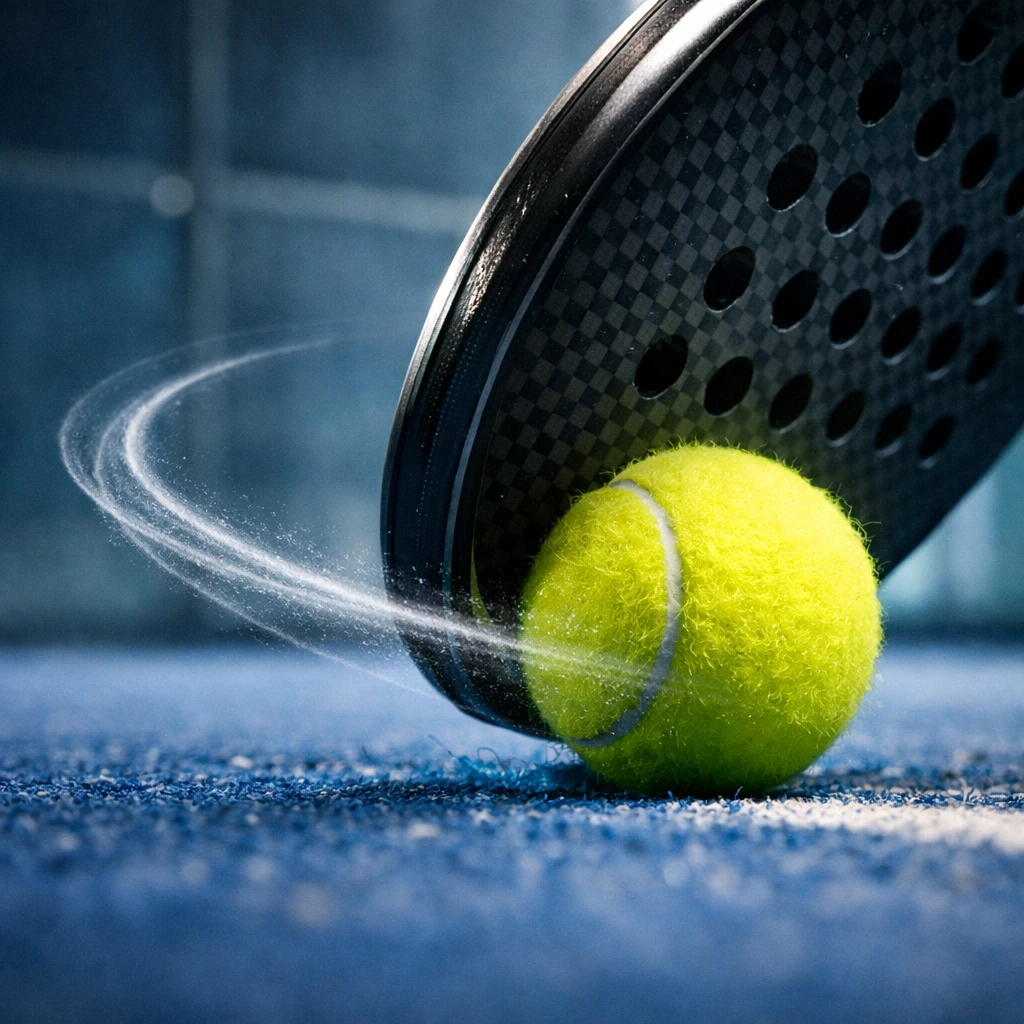
Padel uses a solid perforated racket with no strings, usually shorter and thicker. The other uses a larger paddle with a flat hitting surface, designed for controlled contact.
Ball characteristics differ as well.
One uses a depressurized ball that travels slightly slower after impact. The other uses a lightweight plastic ball with holes, producing a softer bounce and quieter impact.
These equipment choices influence:
Spin potential: The perforated racket surface grips the felt of the ball, allowing for aggressive slice and topspin.
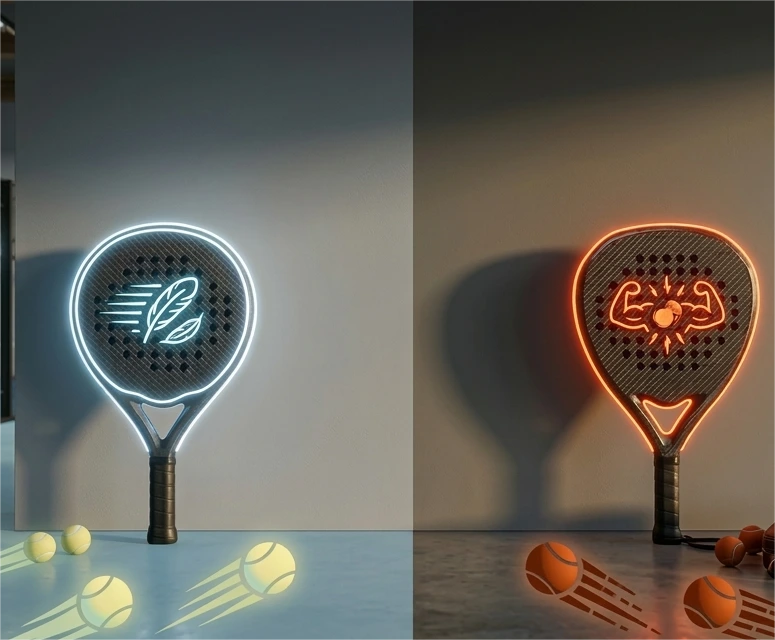
Power generation: The solid core of the racket provides a “hammer effect,” while the paddle relies on quick wrist speed and surface pop.
Shot control: The flat, rigid paddle surface prioritizes placement and “dinking,” whereas the racket allows for more varied touch.
Comfort for beginners: A lightweight beginner padel racket naturally reduces arm fatigue and provides a larger sweet spot, making it easier to keep rallies going from day one.
Playing Style
The rhythm of play differs noticeably.
In the enclosed version, rallies often develop gradually. Players build points with lobs, rebounds, and positioning before finishing at the net. Strategy and patience matter.
In the open-court version, rallies often revolve around quick exchanges close to the net. Players aim to control the non-volley zone and keep shots low.
Typical patterns include:
Enclosed courts
Frequent lobs
Wall rebounds
Gradual point construction
Defensive resets
Open courts
Short strokes
Controlled placement
Quick volleys
Net dominance
Physical Demands
Both sports suit a wide range of players, but the physical demands differ.
The enclosed format requires more movement across a larger area. Players frequently turn and track balls rebounding from the walls. Reaction time and footwork matter. The open format places less emphasis on distance covered. Players move in shorter bursts, especially near the net.
General comparison:
Enclosed courts
More lateral running
Frequent turns
Greater endurance requirement
Open courts
Short movements
Quick reactions
Lower overall running distance
This difference makes the open format especially popular with older players and beginners.
Learning Curve
Both sports remain accessible, but pickle ball usually feels easier in the first session.
The open format tends to be simpler because:
The court is smaller
Rules are straightforward
No walls to consider
Shots require less adjustment
The enclosed format takes longer to understand because players must learn:
Rebound angles
Defensive positioning
Timing after wall bounces
Beginners often rally quickly in either sport, but mastering wall play takes extra time.
Doubles vs Singles Play
Another clear difference appears in how people usually play.
The enclosed format focuses almost entirely on doubles. The court size and tactical structure suit four players best.
Singles matches exist but remain uncommon.
The open format supports both singles and doubles comfortably. Many recreational players switch between the two.
Pace of the Game
Speed differs in a subtle way.
The enclosed format allows longer rallies because rebounds keep the ball alive. Even strong attacks may come back into play.
The open format often produces shorter points. Once a player gains control at the net, rallies can end quickly.
Typical experience:
Enclosed rallies feel flowing and continuous
Open-court rallies feel direct and tactical
Neither is inherently faster overall, they simply feel different
Cost and Accessibility
Cost can influence which sport people choose.
Padel usually requires booking a court, and facilities tend to be specialised. Because of this, sessions often involve shared court fees. Pickleball is often more accessible. Courts appear in leisure centres and public spaces, and some locations allow free play.
Equipment costs also vary.
Padel rackets generally cost more than pickleball paddles, although both sports offer options at different price levels. Investing in quality padel rackets can improve durability and consistency over time, especially for players who plan to play regularly.
Indoor and Outdoor Play
Both sports can be played indoors or outdoors, but conditions affect them differently.
Padel works well indoors because walls protect the ball from wind. Indoor courts provide consistent conditions throughout the year.
Pickleball is often played outdoors, but wind can affect the lightweight ball. Indoor courts provide better consistency when available.
| Feature | Padel | Pickleball |
|---|---|---|
| Court Type | Enclosed with walls | Open court |
| Equipment | Solid racket | Paddle |
| Ball | Pressurized | Plastic |
| Rallies | Longer | Shorter |
| Movement | More running | Less running |
| Learning Curve | Moderate | Easy |
Which One Should You Choose?
Choosing between the two depends on what you want from a sport.
Padel suits players who enjoy:
Longer rallies
Tactical play
Doubles teamwork
Creative shots
Pickleball suits players who prefer:
Simpler rules
Quick matches
Flexible formats
Easy learning curve
Many players try both before settling on a favourite.
If you are still deciding What is the difference between padel and pickleball?, the simplest answer is that padel offers a more tactical experience with wall play, while pickleball provides a straightforward game focused on control and positioning.