This is one of the most common questions new padel players face and the answer can save you a significant amount of money or cost you one, depending on which way you get it wrong. Walk into any padel shop or browse any online retailer in 2026 and you face the same fork in the road: spend £150 to £300 or more on a single premium racket, or invest the same budget in a full starter kit that includes a racket, bag, balls, and grip tape for £80 to £150 total. Both have genuine arguments. The right choice depends on a few specific factors that most buying guides do not address honestly.
This guide gives you the unfiltered answer what each option actually buys you, where the real value lies for a new player, and the one scenario where the expensive single racket is genuinely the smarter move.
An expensive racket does not make a new player better. A complete, court-ready setup makes them more likely to keep playing and that is the factor that actually matters most in the first six months.
What an Expensive Racket Actually Gives a New Player
Premium padel rackets the £150 to £300+ frames used by club-competitive and professional players are genuinely impressive pieces of engineering. Multi-layer carbon fibre layups, rough surface textures, hybrid foam cores, precision balance points. The technology in a top-tier padel racket is real, measurable, and meaningfully better than entry-level equivalents on paper.
The problem for a new player is not the racket’s quality. It is the mismatch between what the racket is designed to do and what a beginner’s technique can extract from it. Premium padel rackets are engineered to amplify the output of a developed technique cleaner spin on brushed shots, more rebound on centred overhead strikes, greater directional precision on volleys. All of these benefits require a consistent, established contact point and swing mechanics to activate. A player who has been on court fewer than ten times does not have those mechanics yet, which means the premium specifications sit unused inside a racket that functions, for their purposes, identically to a mid-range frame.
- What you get: Superior frame technology that will become valuable once your technique develops typically after 12 to 18 months of regular play.
- What you do not get:A bag to carry it. Balls to play with. A grip that fits your hand. Court readiness on day one.
- The hidden cost: Adding a quality padel bag (£30–£60), a tube of balls (£8–£15), and an overgrip (£5–£10) to a £200 racket brings your actual spend to £243–£285 the high end of a complete starter kit budget for one racket and accessories.
💰 Real Cost Check: Before comparing a £200 racket to a £120 starter kit, add the cost of everything the starter kit includes to the racket price. In most cases the true like-for-like cost gap is £60 to £100 not the headline price difference. That context changes the decision significantly.
What a Full Starter Kit Actually Gives a New Player
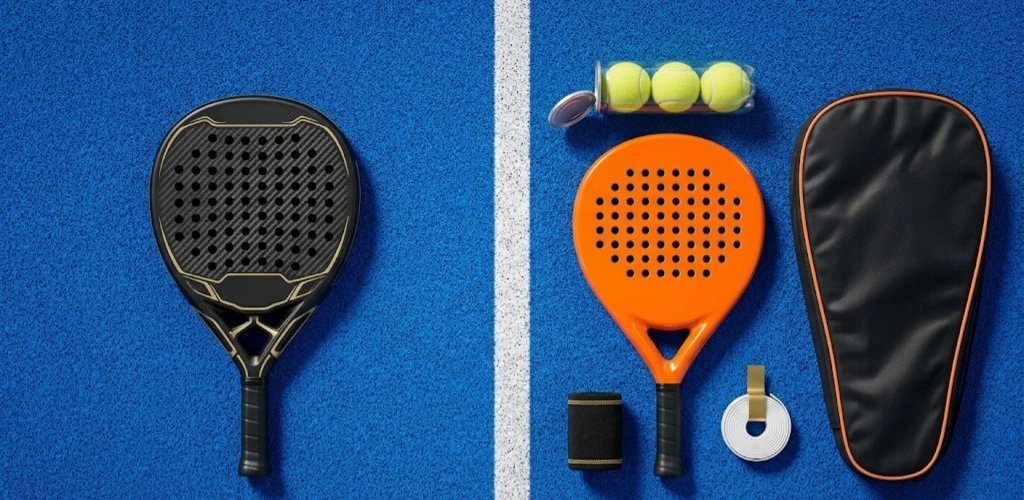
A padel starter kit is not a compromise it is a purpose-built solution for exactly the phase of the game you are in as a new player. The best starter kits in 2026 from brands bundle a round or teardrop padel racket with a padel bag, a set of padel balls, and an overgrip everything required to show up to a court and play, without any additional purchases.
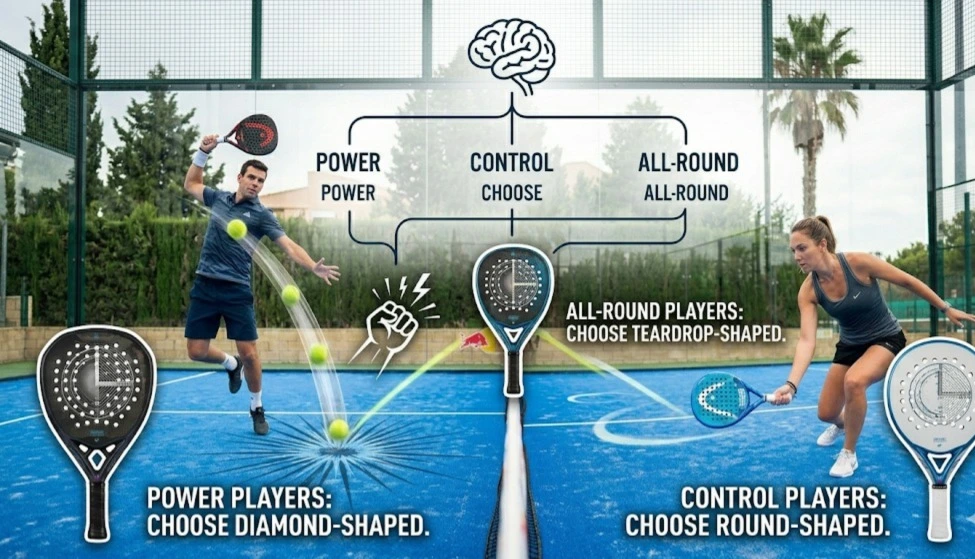
The racket in a quality starter kit is not a toy. It is a mid-range control frame typically round-shaped with a soft EVA core and a low balance point which is precisely the frame specification that most coaches and fitting experts recommend for new players regardless of budget. The round shape gives you the largest possible sweet spot, the soft core dampens vibration and protects developing arms, and the low balance makes the racket quick and easy to manoeuvre at the net. These are not beginner concessions. They are the characteristics that produce the fastest skill development.
What a Good Starter Kit Includes in 2026
- Racket:Round or teardrop frame, 355–365g, soft EVA core, appropriate for 12 to 18 months of development before an upgrade is justified.
- Padel bag: Typically a 1 to 2 racket bag or small backpack sufficient for early sessions and casual club play.
- Padel balls: Usually 3 balls enough for practice and casual match play. Padel balls are sport-specific and distinct from tennis balls; having them included removes a common first-timer confusion.
- Overgrip:A replacement grip that customises handle circumference and absorbs sweat. Critically, it lets the player start developing grip preference from session one.
🎾 Kit Quality Note: The gap between a budget starter kit (£50–£80) and a quality starter kit (£100–£150) is meaningful in 2026. Budget kits often include aluminium or fibreglass frames that feel hollow and dead which gives a false impression of the sport. Spend the extra £30 to £50 for a genuine carbon-composite frame in the kit. The on-court feel difference is immediate and significant

The One Scenario Where an Expensive Single Racket Makes Sense
There is a specific player profile for whom skipping the starter kit and buying a premium frame first is genuinely the smarter move and it is worth identifying clearly so that player does not spend money unnecessarily on a kit they do not need.
If you are coming to padel from an established tennis background particularly if you have played to club competitive level your contact mechanics, split step timing, court awareness, and racket control are already developed. You are not starting from zero. You will extract value from a premium frame faster than a true beginner because your technique will interact with the higher-specification racket within your first few sessions rather than after twelve months. In this case, investing in a quality intermediate padel racket or even an entry-level advanced padel racket a teardrop or mid-balance hybrid frame rather than a full diamond is a legitimate starting point.
The same logic applies, to a lesser degree, to players from squash or badminton backgrounds where racket sport mechanics transfer meaningfully. For everyone else players new to racket sports entirely, casual fitness players, or anyone who genuinely does not know yet whether padel will become a regular habit the starter kit is the right answer.
🎓 The Commitment Test: Ask yourself honestly: after three months, will I still be playing padel twice a week? If the honest answer is ‘I am not sure yet,’ a starter kit is the financially intelligent choice. You can always upgrade to a premium frame when you know the game has stuck. You cannot un-spend £250 on a racket you use four times.
The Upgrade Path: When to Move Beyond the Starter Kit
One of the most underrated advantages of starting with a kit is the clarity of the upgrade signal. When your starter racket starts to feel limiting not when you are making errors, but specifically when your smash output or groundstroke pace feels capped despite clean contact you are ready to upgrade to a dedicated beginner padel racket at a higher specification, or to move directly into the intermediate padel racket range if your technique has developed quickly.
This signal typically arrives at 12 to 18 months for players who train regularly. When it does, the upgrade is straightforward: the bag, balls, and accessories from your starter kit carry forward. You are replacing only the racket which means your next purchase budget goes entirely into the frame rather than being split across equipment you already own.
- Month 0–3:Starter kit. Learn court positioning, lob technique, net play, and split step. Focus on consistency.
- Month 3–12:Continue with starter kit. Technique is still developing the racket is not the limiting factor.
- Month 12–18: If contact is consistent and smash output feels capped, upgrade the racket. Kit accessories carry forward.
- Month 18+:Consider a teardrop or specialist frame from the intermediate range, or a premium option from the advanced category if competitive play is the goal.